What “fragrance” Actually Means on a Product Label
You've seen it on almost everything you own. Lotion. Shampoo. Candles. Laundry detergent. One word, tucked near the end of the ingredient list: fragrance. That word isn't required to tell you anything else.
One Word, No Questions Asked
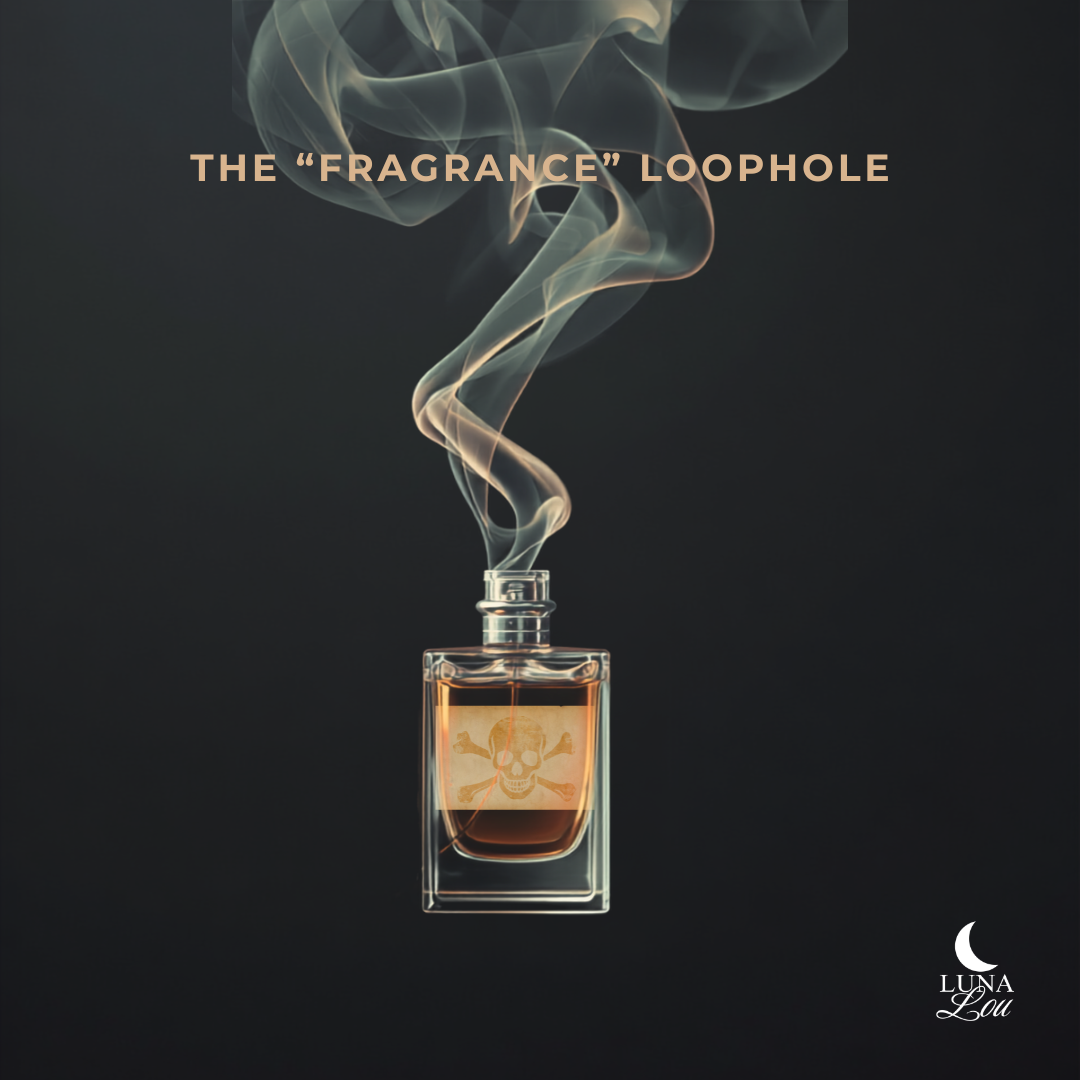
Under U.S. law, cosmetic companies are required to list their ingredients. But that requirement can't be used to force a company to disclose a trade secret — and fragrance formulas are treated as exactly that. The protection isn't new. It traces back to the 1966 Federal Fair Packaging and Labeling Act. In practice, a company can write "fragrance" or "parfum" and stop there. Nothing else has to be named.
Thousands of Chemicals, Zero Disclosure
That single word can represent upwards of 3,000 individual chemicals — bundled under one label term, none of them disclosed. This hasn't changed with time. Even under 2022's Modernization of Cosmetics Regulation Act, fragrance still qualifies as a trade secret. A product can list "fragrance" while hiding a blend that includes known allergens, endocrine disruptors, and synthetic musks.
"Unscented" Doesn't Mean What You Think
Some products labeled "unscented" still contain fragrance ingredients — just enough to mask the smell of everything else, without giving the product a noticeable scent of its own. What's on the front of the bottle and what's actually inside aren't always the same thing. This is exactly why so many people search for what fragrance means on an ingredient label in the first place — the word gives you nothing to go on.
More Than a Transparency Problem
Fragrance in personal care products is one of the most significant sources of daily exposure to phthalates — compounds linked to hormone disruption.
What Luna Lou Does Instead
Every ingredient in every single one of our products is named. Not "fragrance." Not "parfum." Lavender is real lavender. Geranium is real geranium. Take our Sweet Dreams Pillow Mist — just three simple ingredients, all named and there for specific reasons. If it's in the bottle, it's on the label, because an ingredient list shouldn't be dishonest. It's the product.
